ServicesBusiness Valuation
Business Valuation in Taylor, TX
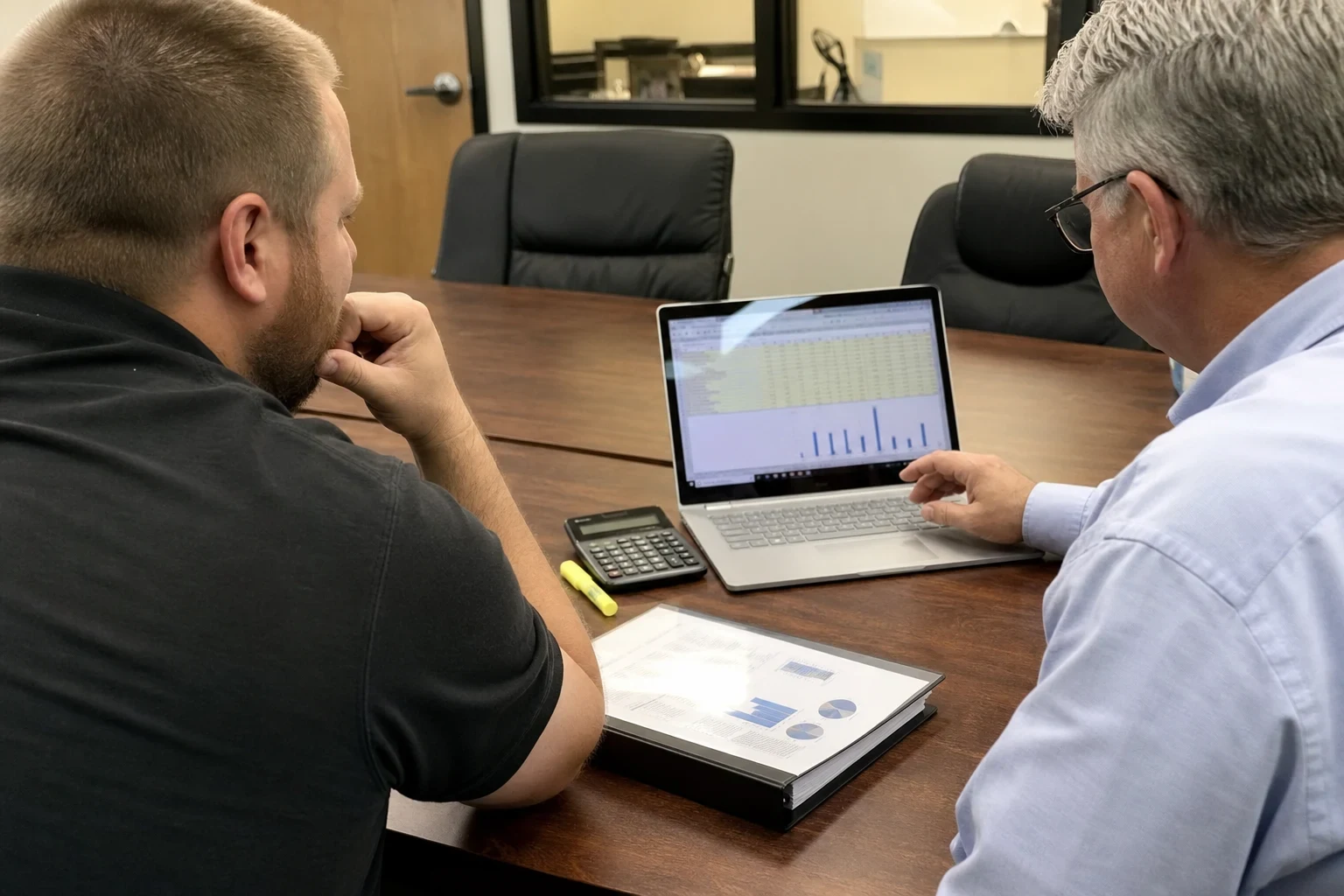
We look at your books, your cash flow and what similar businesses have sold for, then tell you in plain words what a buyer would likely pay. It's free and confidential. Many owners use it as a yearly checkup long before they plan to sell.
What a valuation tells you
A valuation is our estimate of what your business would bring on the open market. It is built from real numbers: what the business earns for its owner, what it owns, and what buyers have paid for companies like it.
Most owners think of a valuation only when they are ready to sell. We think it works better as regular upkeep. If you check the number every year or two, you see what is pulling it down while there is still time to fix it. Clean books, steady customers and a business that runs without you all show up in the price.
This is a broker's opinion of value, meant for planning and pricing a sale. If a lender, court or estate needs a formal certified appraisal, we will tell you so up front.
What we look at
Owner earnings
We start with your tax returns and profit and loss statements for the last three years. Then we add back the owner's salary, personal expenses run through the business and one-time costs. That gives us seller's discretionary earnings, the figure most small business buyers care about.
Comparable sales
We check what businesses of your type and size have actually sold for. Those sales tell us the earnings multiple buyers are paying right now.
Assets and inventory
Equipment, vehicles, inventory and real estate each get looked at separately. We note what is paid off, what is financed and what will need replacing soon.
Risk a buyer will price in
Heavy reliance on one customer, a short lease, or an owner who does everything all lower the price. We point these out so nothing surprises you later.
A written summary
You get the value range, how we got there and a short list of what would raise it. We walk you through it by phone, video or at our office.

Signs it's time for a valuation
- You haven't checked in years
- Markets move and so does your business. A number from five years ago is just a guess now.
- Retirement is on the horizon
- If you want out in three to five years, now is when you can still change the number. Our exit planning work starts here.
- A buyer has called you
- Unsolicited offers are common. Before you answer, you should know if the offer is fair.
- A partner wants out
- A buyout needs a price both sides can live with. An outside valuation keeps that talk grounded.
- Your numbers feel messy
- If you're not sure what the business really earns, a buyer won't be either. A valuation sorts that out.
How a valuation works
- 1
Start with a conversation
Tell us what the business does, what's prompting the question and when you might want to make a move. Nothing you say leaves our office.
- 2
You send the records
Usually three years of tax returns, recent financial statements, an equipment list and your lease. We tell you exactly what we need, nothing more.
- 3
We run the numbers
We recast your earnings, pull comparable sales and weigh the risks a buyer would see. If something is unclear, we ask instead of guessing.
- 4
We go over it together
You get a value range and a plain explanation of how we got there. We also tell you what to work on, whether you sell next year or stay ten more.
What affects your business's value
The valuation itself is free and confidential. What follows is what moves the number we give you. Some of these you can change over time, which is why a regular check is worth doing.
- Earnings and their trend
- Steady or growing owner earnings bring a higher multiple. A drop in the last year gets a lot of attention from buyers.
- How clean the books are
- Records that match your tax returns build trust. Cash that can't be traced usually can't be counted.
- How much it depends on you
- If customers and staff only deal with you, the buyer is taking a bigger risk. Trained staff and written procedures help.
- Lease and location
- A long lease with renewal options protects the buyer. Owning the property opens up a business and property sale as well.
- Industry and buyer demand
- Some trades sell at higher multiples because more buyers want them. Growth along the corridor from Round Rock to Taylor has brought steady buyer interest to many local businesses.
Business valuation questions
- Is the valuation really free?
- Yes. We do free, confidential valuations with no retainer and no hidden fees. If you later list with us, you still pay nothing up front, because we only get paid when the seller does.
- Will anyone find out I'm thinking about selling?
- No. Your employees, customers and competitors won't hear about it from us. We work from the records you send and talk with you directly.
- How long does it take?
- It depends mostly on how quickly we get your records and how clean they are. Simple businesses with organized books move fastest. We will give you a realistic timeline when we first talk.
- How accurate is the number?
- We give a range, not a single figure, because the final price depends on the buyer and the terms. Our range is based on real sales and your actual earnings. We have over $5 million in businesses sold, so we know what buyers here actually pay.
- Do I have to sell after getting a valuation?
- No. Plenty of owners use it to plan, settle a partner buyout or just see where they stand. There is no obligation to list.
- Can I get a valuation for a business I want to buy?
- Yes. If you are looking at a listing, we can help you judge whether the asking price fits the earnings. Our buy a business and acquisition financing guidance services cover more of that work.
Find out where your business stands
Pick up the phone for a free, confidential valuation. We'll tell you what it's worth today and what would help it hold its value.